ReachScout: evidence-backed professional research
Finds the right recruiter, hiring manager or founder from public sources, shows the evidence behind every data point, and drafts a context-aware introduction. Built to be explicitly not a scraper or spam tool.
Type
Personal project
Role
Full stack, solo
Duration
Source on GitHub
Tools & Technologies
Problem
Finding the right person to contact at a company, and having something genuine to say, takes a lot of manual searching. Most tools that automate it scrape private data or guess email addresses and present the guesses as fact.
What I built
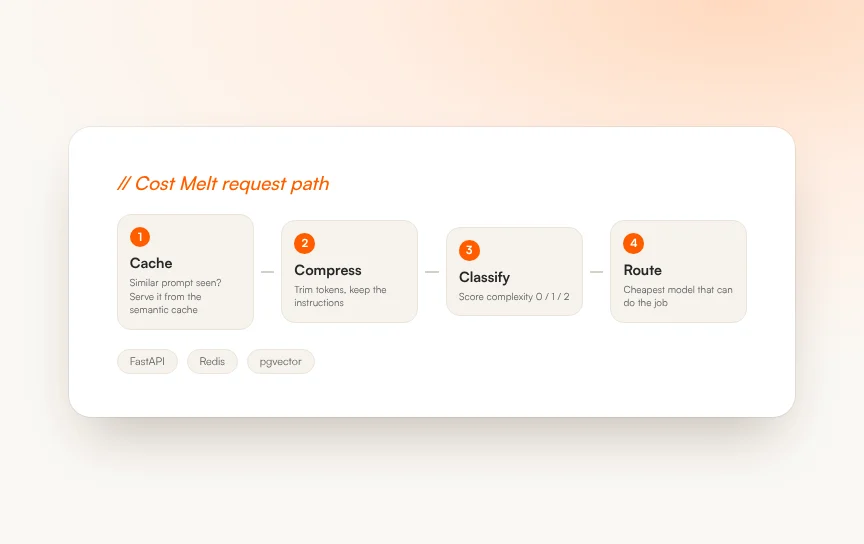
A research assistant with a five-stage search pipeline:
- Normalize the organisation name
- Generate queries, stripping dangerous search operators
- Retrieve publicly available results through a swappable search provider
- Extract professional profiles, keeping the source for each data point
- Rank and deduplicate, merging profiles that describe the same person
Each contact gets a 0 to 100 confidence score with a plain-English explanation of which public source supports which fact. Outreach drafts are generated with Claude, with templates as a fallback when no API key is set.
Honesty built into the data model
- Emails are always labeled as publicly listed, verified, general contact, or pattern estimate
- Pattern estimates are hidden by default, never marked verified, and excluded from CSV exports
- A suppression list records "do not contact" requests with a reason
- Nothing is sent automatically
Security
- Every outbound URL is checked against a private-network blocklist before fetching (SSRF protection)
- Supabase row-level security on all user data, plus ownership checks on every API route
- Per-user rate limits on searches, profile lookups, verifications and exports
- No API keys or email bodies in logs
Testing
Unit and integration tests with Vitest and end-to-end tests with Playwright cover the cases that matter most: duplicate profiles merge, official emails are labeled correctly, pattern estimates are never labeled verified, private-network URLs are rejected, and invalid input is refused. A demo mode with fictional contacts on example.com domains runs without any API keys.
// More projects
Have a look at my other work
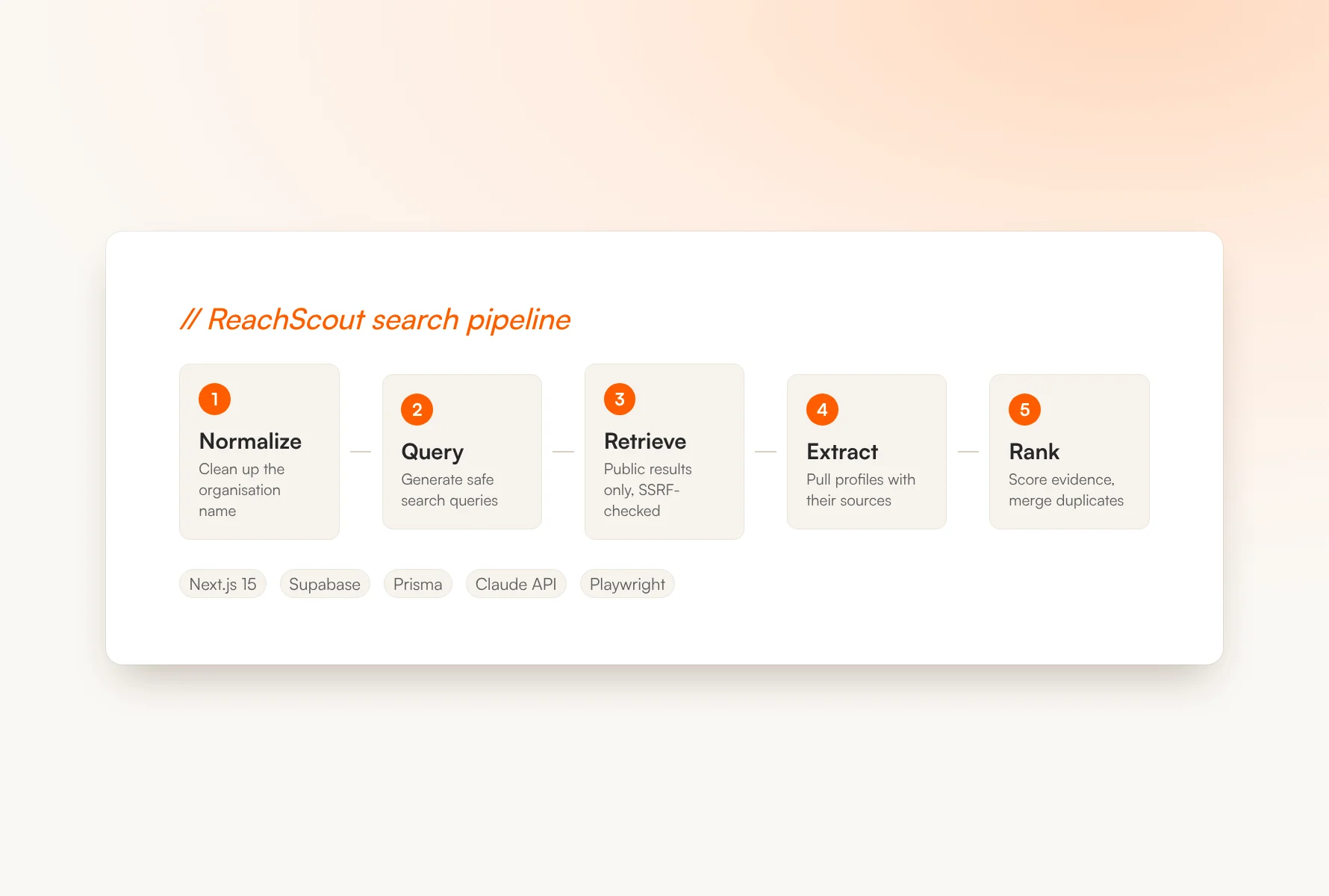
Fraud Triage: deciding what to do with a fraud score
A LightGBM model plus a cost-based policy that decides approve, review or block under a fixed daily analyst budget. 66% lower total cost than reviewing the highest-probability cases.

Personal project
ML + full stack, solo
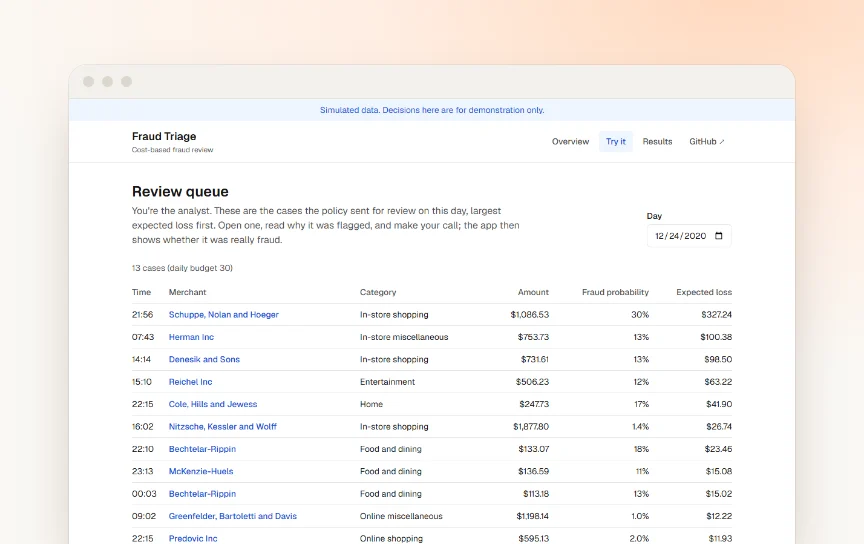
Cost Melt: a drop-in proxy that cuts LLM costs
An HTTP proxy between an app and LLM providers that routes each prompt to the cheapest capable model, serves repeats from a semantic cache, compresses prompts and micro-batches requests.

Personal project
Backend, solo